The war against animal fats was launched by corporations and has led to shockingly high rates of diet-related diseases largely attributable to the consumption of ultra-processed foods (UPF), including the ubiquitous ‘vegetable oils’ and their derivatives. From margarine to canola oil, this stuff just isn’t good for you. Whenever I go home to visit Mum and Dad, I open the fridge, announce that I can ‘still believe it isn’t butter!’ and throw out the tubs of margarine in a never ending quest to get them to eat more whole foods. I could write a lot more about this, but I love and respect my parents and how they raised us, in spite of the industrial diet, which infiltrated the majority of American households as I grew up. But a quick observation – Dad grew up in rural Alabama in the 1940s and 50s, the youngest of 11 children in a Southern Baptist family, which left him a lover of real butter, fresh fruit, and black walnuts cracked standing under the tree. Mama, on the other hand, grew up in small-town Oregon in a working class family that was the first generation to revere commercially canned foods, with a mother who baked a mean cherry cobbler but wasn’t otherwise fond of cooking, leaving my mum with a palate for whatever was quickest to dump out of the can. Their division of labour left what little cooking occurred to Mama, so processed food was the norm in our house, and for them, still is.
My parents’ relation to food and nutrition is not unlike the patterns seen globally, as proletarianisation has seen people transitioning, willingly or not, from rural producers of food to urban workers reliant on industrial food, with devastating consequences for individual and public health and the ecosystems ravaged by industrial monocultures. Stuart and I have been fortunate to travel widely and deeply, and in our 35 years of travelling together, we have seen and tasted the decline in the quality of ingredients in nearly every corner of the globe, from America and France to Japan and Malaysian Borneo. The impact is still most obvious in cities, such as we saw most recently in Sarawak, where next to food markets featuring a kaleidoscope of local produce are streets of restaurants serving up ultra-processed noodles topped with vegetables imported from China. Only in traditional villages cut off from this toxic supply can you still taste the nutritious and culturally-rich flavours of place. Those where multinationals like Nestle have intentionally, colonially penetrated such as many riverside villages in the Amazon, foodways are being lost to the onslaught of packaged crap sold as ‘modernity’.
Read up on the industrial history of margarine – a.k.a. ‘coal butter’ – for a glimpse into the corporate tactics to turn industrial sludge into everyday staples, and the resulting twin crises of under- and over-nutrition. The definition of ultra-processed foods (UPF) is quite simple – if there are any ingredients in the food-like product that you can’t find in a home pantry, it is UPF. ‘Vegetable’ or seed oils (canola, palm, rice bran, corn, etc) are by definition UPF – they can only be produced in factories. The exceptions are cold-pressed oils such as olive, grapeseed and some sunflower oil, which are the only oils we use to make aioli. We cook everything in pork or beef fat, or butter or ghee, or very occasionally in olive oil.
Palm Oil: Dust to Dust
While basically all monoculture seed and grain crops are ecologically disastrous systems designed to grow non-nutritious ingredients for UPF (or cosmetics, animal feed or biofuels), none matches palm oil, which is in nearly every packaged food product in the supermarket, and makes up 40% of global oil production. 85% is produced in Indonesia and Malaysia, with devastating consequences for biodiversity and the survival of many species of plants and animals, including Orangutans, pygmy elephants and the Sumatran rhino, amongst others. Driving the length of Sarawak in Malaysian Borneo in early 2024, we bore witness to the devastation firsthand. On one stretch between Bitiang and Miri we saw nothing – not one thing – that was not oil palm plantations as far as the eye could see. What really shocked us was the amount of earthworks apparently required – the land is bulldozed and terraced for each line of palms, which take three to four years to fruit. They continue to produce for up to thirty years, and the average life cycle of a plantation is 25 years, after which it is bulldozed and begins again. The erosion from this production model is intense, and you can see it in the colour of the rivers, which the Dayak (the general term for Indigenous Peoples in Sarawak, made up of several distinct Indigenous Peoples) say used to be clear. The silt and fertiliser impacts on the quality of the water to the extent that fish stocks are severely depleted, in addition to the biodiverse jungle foods once bountifully available to the Dayak peoples.
From the destruction of soil, waters, and entire ecosystems, oil palm does not even deliver food as we know it. It is refined, bleached, and deodorised (RBD in industry parlance) to be transformed into a plethora of ingredients, including: Vegetable Oil, Vegetable Fat, Palm Kernel, Palm Kernel Oil, Palm Fruit Oil, Palmate, Palmitate, Palmolein, Glyceryl, Stearate, Stearic Acid, Elaeis Guineensis, Palmitic Acid, Palm Stearine, Palmitoyl Oxostearamide, Palmitoyl Tetrapeptide-3, Sodium Laureth Sulfate, Sodium Lauryl Sulfate, Sodium Kernelate, Sodium Palm Kernelate, Sodium Lauryl Lactylate/Sulphate, Hydrated Palm Glycerides, Etyl Palmitate, Octyl Palmitate, and Palmityl Alcohol. Ultra-processed food – none more so than palm oil – destroys everything in its pernicious path – starting with the traditional lands of Indigenous Peoples and peasants, and consummating its life cycle annihilation by taking people’s health and lives.
One last anecdote about palm oil. While we were in Malaysia, travelling aghast through the plantations, news broke that the Malaysian government had raided a shop selling products labelled ‘no palm oil’ and confiscated all of them. One report explained ‘In Malaysia, it is illegal to sell products with the “No Palm Oil” label which is seen to be discriminatory against products containing the widely used vegetable oil, an economic mainstay for Malaysia.’ Let that sink in for a bit.
Quite unlike what I would have written a decade ago in response to these daily horrors of the modern food system, I’m not going to urge you to boycott products with palm oil (though where possible, that’s great too). And I’m not going to press the individual responsibility to educate yourselves about the insidious complexities of food(ish) production and processing (though clearly I would not discourage anyone – knowledge is power, after all). Instead, I’m going to urge you to join democratic collectives like the Australian Food Sovereignty Alliance or the many local organisations of farmers, allies, hunger activists and more, to add your support to those of us working together to radically transform the food system from the ground up, while lobbying for reforms to protect everyone from the worst ravages of industrial food systems. This is neither the first nor the last time I will recommend collectivising, the best hope we have to ensure a world of radical sufficiency for all, not only those privileged enough to know and access nutritious, ethical, ecologically-sound and socially-just food.
Read like the Jonai: Ultra-Processed People: The Science Behind Food That Isn’t Food, by Chris van Tulleken. 2023. W.W. Norton & Company.
NB: This is an excerpt from my forthcoming cookbook Eat Like the Jonai: Ethical, ecologically sound, socially just and uncommonly delicious, a fundraiser for the collective micro-abattoir we are building here at Jonai Farms, due out in November. Read more about that project and grab a copy here!
Negotiations towards the Global Biodiversity Framework (GBF), which pursues a 2050 Vision for a world living in harmony with nature, are in the final stage before adoption at COP15 of the Convention on Biological Diversity (CBD) in December 2022.
Amongst the many elements still under negotiation is the wording of the mission for the GBF. There are five alternative wordings, of which three have reference to a nature-positive world.
Language is never neutral, and language in international conventions relies on a long history of politics, compromises, and negotiated definitions. Any newly conceived language should be closely scrutinised:
What does it look like?
What does it mean?
How will it be measured?
Who is supporting it?
Will it benefit some groups over others, or will it deliver equity and justice for all?
What does it look like?
The Informal Group on the post-2020 GBF has proposed streamlined text wherein the term ‘nature positive world’ is placed as alternative text to the text ‘to put nature on a path to recovery’. The term ‘nature positive’ is also used in Targets 18, 19.1 and Section H.
What does ‘nature positive’ mean?
The term nature positive sounds good, but its meaning remains unclear in the context of the CBD.
There are various definitions for nature positive, all variations on this one:
Nature-positive is the term used to describe a world where nature – species and ecosystems – is being restored and is regenerating rather than declining.
‘Nature’ can be many things which are not biodiverse but do have ‘natural elements’, such as a monoculture plantation which lacks ecosystem diversity but is still called ‘nature’ by many.
‘Positive’ is even more ambiguous and is related to other concepts such as ‘net gain’ and ‘no net loss’. The documents explaining the Nature Positive concept make it clear that these are indeed the basis of the proposal.
The CBD text does not define ‘nature’. In contrast, ‘biological diversity (or biodiversity) is clearly defined, and includes ecosystems and habitats, species and communities, and genes and genetic material. These all play important social, scientific or economic roles.
No Net Loss and Net Gain
A ‘net’ approach implies that it’s acceptable to keep losing elements of nature (e.g. carbon or biodiversity) as long as losses are compensated elsewhere (often, later on).
There are several problems with this approach:
It fails to account for the losses of ecosystem functions and the benefits they provide to the human and more-than-human world.
It presupposes that one can compensate one type of ecosystem, species, or even sacred grounds for Indigenous Peoples for another, ignoring the uniqueness of each of them, as well as their multiple biodiversity values, as identified by IPBES. When protecting biodiversity, it is nonsensical to suggest we can offset the loss of one species with another, or that we can replace the destruction of one habitat or ecosystem with another.
It promotes the financialisation of nature, as these offsets commodify nature by putting an economic value on it, to be traded in markets.
In climate policies, the term ‘net zero’ has justified carbon offsetting schemes that have delayed the urgent decarbonization of our economies and given an easy way out for polluters to keep emitting at current levels.
How will we measure ‘nature positive’?
The document called ‘The Measurable Nature Positive Goal for the CBD Mission’ includes ‘outcome metrics for the nature-positive proposal such as quantifying the maintenance and improvement of natural processes, ecosystems and species over time, through natural processes such as hydrological integrity, sediment transport and the integrity of estuaries, migration patterns, carbon sequestration and storage, the integrity of tidal zones, natural fire regimes, and vegetative cover that supports rainfall patterns.
None of the proposed metrics are agreed upon in any multilateral space. If the CBD approves them, it will water down what little ambition exists in the GBF. Not only because offsetting maintains the right to destroy, but also because it gives actors and decision makers the option to decide which metric to use. The measure which is easiest to fulfil, such as carbon sequestration and storage, will take preference, even if they are not the best indicators for biodiversity or the rights of Indigenous Peoples and peasants. A concrete example is reforestation with species that capture high amounts of carbon but are very poor in ecosystem functioning. Neither is equity factored in, with the Global South and its peoples likely to face the greater burden of becoming ‘nature positive’, as biodiversity is largely in these geographies, with no consideration of the role that the Global North has historically played, and continues to play, in fostering biodiversity loss.
In June 2021, the Taskforce on Nature-related Financial Disclosures was launched. This Taskforce consists of 34 individual members representing financial institutions, corporates, and market service providers with US$19.4 trillion in assets, and it aims to support a shift in global financial flows away from nature-negative outcomes and toward nature-positive outcomes.
Whose interests are served by ‘nature positive’ framing?
The business sector is pushing strongly for this language. Once again finding a way to capitalise on false solutions to problems they have caused, The Future of Nature and Business report (2020) estimates that a nature-positive economy canunlock $10 trillion of business opportunities by transforming the three economic systems responsible for almost 80% of nature loss: energy, infrastructure, and food.
In fact, the most effective way to transform economic activities in order to halt and reverse biodiversity loss is through strong regulatory measures on the actors behind the destruction of ecosystems. A framing that would benefit the business sector more than key rightsholders will not take us on a path to transformative change.
Indigenous peoples, peasants, and local communities, women, and youth are usually marginalized from offsetting mechanisms, certification schemes, and climate/conservation grants and incentives, either because their typically small organisations don’t comply with the established criteria to access funding, or because much of their fights for land and tenure rights, socio-ecological justice and against extractive industries don’t count for offsetting purposes.
What do we want to change?
We need equity and rights-based approaches at the core of the Global Biodiversity Framework, and this means that we need a vision and a mission that respond to this need.
To genuinely protect biodiversity, we need to ensure that ecosystem functions, ecological integrity, and the well-being of the communities who depend on them are no longer threatened and destroyed. And this will only happen if we embrace a global goal that doesn’t offer an easy way out for further destruction.
Rightsholders, their actions on the ground, traditional knowledge and their fights for human rights and land and tenure rights have to be supported through direct funding mechanisms. These are not defined in the nature positive framing, but they are in the Nagoya Protocol, UNDRIP, and UNDROP.
Genetic resources, species, ecosystems, their functions, and the benefits they provide can’t be replaced. Once a species is extinct, it is gone forever.
We won’t accept that the precious cultural and biological diversity we have is lost to an unfair and unequal socio-economic system, and we won’t accept promises that once lost this diversity can be replaced.
How do we bring about the change?
Halting biodiversity loss is paramount, not just slowing down its rate. It needs to be given precedence over restoration and recovery – because extinct species cannot be restored. So, preserving existing biodiversity needs to be the top priority and is not automatically included in ‘recovery’. A distinction between loss and recovery is also needed to avoid offsetting.
Socioecological justice, which encompasses the complexity of the multifaceted crisis we are facing, should be at the core of new approaches to biodiversity conservation. We need this agenda to deliver results for all people, especially those who are most connected to biodiversity and who can lead humanity on the path to harmony with nature.
Indigenous Peoples, peasants, and local communities are the best guardians of the world’s ecosystems, and yet their vision and wisdom are not leading nor recognised in the nature positive framing. Women are custodians to precious knowledge and practices to manage biodiversity in a sustainable way, and youth are already implementing transformative change actions on the ground; both are missing as actors in nature positive framing.
Equity and justice for all people, especially those most connected to biodiversity who are often marginalized from environmental decision-making processes, are currently not the core of nature positive framing. Therefore, we need to rethink the mission of the Global Biodiversity Framework to ensure that in 2030 we have effectively addressed the drivers of biodiversity loss, for the benefit of present and future generations and all life on earth.
I am a fully vaccinated pragmatic anarchist agroecologist and I want to explain how I got here to help those who, like me, have a healthy skepticism for authority and a strong ethic of care and responsibility for others, as you make important decisions around vaccination against COVID-19.
I had my first baby in 1999, and like many new mothers, I struggled with the often conflicting array of information around everything from co-sleeping and breastfeeding to whether and when to vaccinate. The internet was still pretty new, but there was already a lot of information available in a horizontal peer-to-peer manner unheard of until the World Wide Web democratized information sharing. For a curious well-educated Earth mama type, the internet seemed like a gold mine of alternative information that suited my anti-establishment ways, but also fed my confirmation bias when I let my guard down.
In my pre-natal research, I learned the importance of vaccination for public health – that we protect everyone, but especially our most vulnerable, by creating herd immunity with vaccines. I also started reading about adverse vaccine reactions, and as I grew Oscar inside my very own body I struggled with what seemed like an unacceptable trade off to protect public health – other people, that is – by knowingly injecting something into my healthy baby that carries a small but frightening risk of injuring or even killing him. I read scientific papers and natural parenting websites, hung out in online chat rooms, and talked with all the mothers I knew about what felt like the most overwhelming and important first decision as a parent.
The vaccination schedule called for the first shot to be given for Hepatitis B before we would even leave the birthing centre, a disease primarily transmitted through unprotected sex or sharing needles. At two months, another raft of vaccines were on the schedule for DTP (diptheria, tetanus, and pertussis/whooping cough), polio, and Hib. At four months, three more jabs. At six, three more. At 12 months, the MMR (measles, mumps, rubella) and a Hib booster. At 18 months, two more shots. By the time Oscar was 18 months old, he would have had 14 separate injections to vaccinate him against eight diseases. To a new mother, that can sound pretty alarming.
The situation was made worse because in 1998 a report was released by Wakefield, et al claiming that the MMR vaccine could cause autism. I went well down the rabbit hole reading everything I could to find out how serious this risk would be for my baby. A disproportionate amount of self-selected material from the natural parenting genre told me vaccines are dangerous. The scientific literature mostly said they carry very low risk of adverse reactions, but the risk exists. Scientific reports also demonstrate repeatedly that vaccines save thousands of lives every year, and that when vaccination rates go down due to the spread of scary misinformation, illness and death rates go up.
The Wakefield report was found to be fraudulent in 2010 (stripping Wakefield himself of his license to practice). In spite of its fraudulent influence on my and thousands of others’ thinking, I managed to read enough diverse and credible sources on vaccination to come to the decision to vaccinate our children, albeit at a slightly delayed and more spread out schedule. This was informed by the privileged fact that I stayed at home with our children in their first years, and they were not put into child care or any other crowded environment where illness spreads readily. The vaccination schedule is written to ensure all children have access to vaccines to account for a diversity of living situations, including child care attendance or a low-income parent’s capacity to readily access maternal and child health services in the early years.
It is also designed to ensure the most vulnerable in our communities – First Nations Peoples, immuno-compromised, pregnant women and babies, the elderly, and low-income communities who disproportionately suffer from underlying health conditions – are protected by broad herd immunity achieved by vaccinating those of us able to be vaccinated.
My decision to vaccinate our children was both well and poorly informed by the research I did. My research was really just a survey of the literature – the scientists had conducted the medical research and reported their findings. Anti or pro-vaccination literature written by people without scientific training is rhetorical at best, fraudulent at worst. Even this piece I’m writing for you now is not trying to make a scientific argument, I’m sharing my story to offer the moral, emotional, and pragmatic steps I took to decide to vaccinate that led me to my second Pfizer jab today to protect myself and others in and beyond our community against COVID-19.
Back in 1999, as I weighed up the risks to my first baby against the risks to many more people in an unvaccinated population, I came down on the side of the public good. I rejected the individualist concern that would put my or my baby’s interests ahead of the collective. I did that for everyone, but especially for the vulnerable, because I also knew that although my children were privileged to have a healthy stay-at-home mother obsessed with organic produce and cooking three times a day, that is not many other peoples’ reality.
Kombu-merri woman and philosopher Mary Graham talks about the difference between the survivalist ethic of settler society and the relational ethic of Aboriginal and Torres Strait Islander Peoples. While I think the survivalist ethic is fairly self-explanatory, the relational ethic embraces complex kinships with other humans and also the non-human world, beginning with the Land from which we all come. A custodial ethic is born of this complex understanding of relationality – how we are all related to everything – and it leaves no room to look after oneself at the expense of others. The collective of human and non-human actors and Land is more important than individual concerns.
The burden of colonial disease started with smallpox and currently manifests as COVID and a plethora of non-communicable diseases preventable by ensuring access to secure and safe housing, nutritious and culturally-appropriate food, right livelihoods, and no history of inter-generational trauma. Colonisers brought the smallpox and in some cases intentionally spread it to eradicate Indigenous Peoples here in Australia and other colonized countries – genocide via disease transmission amongst other violent means.
Voluntary refusal to vaccinate is to my mind a continuation of the colonial legacy of lack of care for the First Peoples of this Land. It signals a level of privilege that you have a choice whether to protect yourself from the dangers of COVID by staying safe at home or otherwise in low-risk environments, unlike the essential workers in health care, meat processing facilities, and supermarkets.
Here at Jonai Farms, we are in a very safe and secure environment with limited exposure to areas likely to host infection, and we are all double vaccinated. Our values and decision making that prioritise justice, equity, and health for all made the choice to vaccinate inevitable. We talked about our early nervousness about a new vaccine for a novel coronavirus and accepted that it was a normal emotional response to a global pandemic, and that we should all be vaccinated.
For some people, mistrust of authority is a driving motivation against vaccination. I have spent a lifetime fighting against government overreach, and engaging in ‘anarchist calisthenics‘ I cross the road against the light when there is no traffic in long sight, and I may choose to ignore rules when there is no material impact potentially inflicted on others. I have devoted my life to lobbying governments at all levels from local to global to bring about reforms so that everyone can live in an ecologically-sound and socially-just world.
At the same time, I conform with laws that protect the public good such as speed limits and preventing foodborne illnesses by following a stringent food safety regime in our on-farm butcher’s shop. We do things the government tells us to all the time, but the government should not even have to tell us to protect our fellow travellers on this earth with the tried and true practice of getting vaccinated against deadly diseases if you can.
And while I’m not here to dump data on this discussion, the rates of illness and death amongst the unvaccinated as compared with the vaccinated speak for themselves. The risk of adverse reactions to the vaccines are far lower than the risk of contracting COVID or suffering serious complications, and to suggest otherwise is wilfully misleading in the face of the overwhelming global evidence since March 2020. If the risk to you personally is low, think about your grandparents, and think about Aboriginal People in remote communities. Think about the man having a heart attack or the child who was in a car accident on their way to a hospital overwhelmed with unvaccinated COVID patients. Nobody is expendable.
I am a fully vaccinated pragmatic anarchist agroecologist, and I hope this helps more people to get over fears or mistrust of authority, and to put others in and beyond your community first.
I am writing from the lands of the Dja Dja Wurrung, and pay my respects to their elders past and present, and acknowledge that their land was never ceded. We are listening and learning from the Land, and the Djaara and other First Peoples how to enact a custodial ethic in all that we do here.
I am going to briefly review some of the worst consequences of capitalist industrial agriculture for biodiversity before turning to agroecological solutions.
Biodiversity for food and agriculture is all the plants and animals – wild and domesticated – that provide food, feed, fuel and fibre. It is also the myriad of organisms that support food production through ecosystem services – called ‘associated biodiversity’ in policy speak. This includes all the plants, animals and micro-organisms (such as insects, bats, birds, mangroves, corals, seagrasses, earthworms, soil-dwelling fungi and bacteria) that keep soils fertile, pollinate plants, purify water and air, keep fish and trees healthy, and fight crop and livestock pests and diseases.
In 2019 the Food and Agriculture Organisation (FAO) of the UN released the first Global Assessment of Biodiversity for Food and Agriculture. The report found that ‘many key components of biodiversity for food and agriculture at genetic, species, and ecosystem levels are in decline’ and that ‘evidence suggests that the proportion of livestock breeds at risk of extinction is increasing’.
For too long, biodiversity has been considered incompatible with agriculture — something that happens on the other side of the fence, or only in shelter belts. Even the current work by the Convention on Biological Diversity (CBD) towards a post-2020 Global Biodiversity Framework takes a productivist approach in its limited attention to agriculture, and a colonial approach to conservation in proposals to lock up more land away from sustainable human use — this is a fundamental violation of First Peoples’ right to land and denial of the thousands of years of care and co-production with Nature.
Australia is among the top seven countries worldwide responsible for 60% of the world’s biodiversity loss between 1996 and 2008, and we are now facing the sixth mass extinction event in 4.6 billion years (Muir 2014).
Agricultural biodiversity globally is disappearing rapidly, as industrial agriculture, forestry, and fisheries systems use homogeneous, proprietary seeds, trees, breeds and aquatic species, scientifically bred and genetically modified to include limited traits, which are useful to industry. They are grown in simplified agroecosystems that are heavily contaminated with biocides and other agrochemicals.
Of some 6,000 plant species cultivated for food, fewer than 200 contribute substantially to global food output, and only nine account for 66 percent of total crop production.
The world’s livestock production is based on about 40 animal species, with only a handful providing the vast majority of meat, milk and eggs. Of the 7,745 local breeds of livestock reported globally, 26 percent are at risk of extinction.
Nearly a third of fish stocks are overfished, more than half have reached their sustainable limit.
Wild food species and many species that contribute to ecosystem services that are vital to food and agriculture, including pollinators, soil organisms and natural enemies of pests, are rapidly disappearing.
It is timely in this period of COVID to remind ourselves of the risks of these extreme losses of biodiversity in agriculture. The production of a constantly narrowing range of species and breeds of animals and plants is leading to greater risks in our food system. In the case of the rise of zoonoses like coronavirus, one of the most significant risks is from intensive livestock production, and the expansion of industrial agriculture into remote areas of forest, giving rare pathogens new opportunities to access vulnerable hosts, giving rise to new and more virulent strains of influenza and coronaviruses such as COVID-19.
Some of the key risks posed by intensive livestock production include: the separation of breeding animals from farms where their offspring are raised and later harvested for food, and the narrowing of genetic resources to very few breeds of genetically similar animals that are then crowded into unhealthy conditions that suppress their immune systems. This creates the perfect breeding ground for illness — these intensive sheds are literally ‘food for flu’.
Biodiversity-friendly practices are on the rise
The good news is that the FAO report highlights a growing interest in biodiversity-friendly practices and approaches. 80 percent of the 91 countries indicate using one or more biodiversity-friendly practices and approaches such as: organic agriculture, integrated pest management, conservation agriculture, sustainable soil management, agroecology, sustainable forest management, agroforestry, diversification practices in aquaculture, ecosystem approach to fisheries and ecosystem restoration.
While most have surely heard of regenerative agriculture, agroecology is much less known or understood in Australia. Agroecology is a science, a set of practices, and a social movement that fosters the democratic participation of farmers in the food system. I briefly mention this distinction to show that agroecological and regenerative farmers are all working to recuperate ecosystems from centuries of colonial damage, but also to highlight that the agroecology movement is underpinned by notions of social and economic justice as well — putting solidarity with Indigenous Peoples first, and solidarity economies that reject corporate power and capitalism next.
A Custodial Ethic
There is an ancient ‘custodial ethic’ amongst Indigenous Peoples and peasants globally, and a growing one amongst agroecological and regenerative farmers in the Global North, stemming from place-based understandings of country, reactions to climate change and loss of biodiversity, and an increasing willingness to grapple with what it means to hold title to the unceded lands of First Peoples (while working out local strategies to ‘pay the rent’, share land, or give land back to its Original Custodians). I want to share a couple of examples of farmers and First Peoples collaborating on Country and furthering the agroecological transition with you here in Australia.
Nguuruu Farm is a diverse biodynamic farm of 220 acres on Ngunnawal land in the southern tablelands of NSW, with heritage breed Belted Galloway cattle, and rare breed Silver Grey Dorking chickens and eggs, fruits and vegetables. Murray and Michelle have shared that they are making a part of their land available to local Indigenous custodians ‘for bush tucker, a native nursery, agroforestry for traditional implements, a cool burn school, or perhaps a place for guided tours. Could be all of those things, or something else.’
They wrote that ‘the partnership is struck and governed under ‘Yindyamarra’ – the Wiradjuri lore of respect for all things. It means to ‘go slow, be patient, take responsibility, and give respect’. They are engaging in a relationalism intrinsic to much Aboriginal political ordering, a way of knowing and being where the very land is the Law, and one’s relationship to it is based on a mutualism that creates an ethical impulse to care for Country and everything on it. Embracing these ways of knowing is a critical and much-needed step in the right direction for agriculture in Australia.
Millpost Farm, also in the southern tablelands of NSW, transitioned a family sheep farm to a broadacre permaculture farm in the late 1970s. They produce wool and a small offering of organic garlic and tomatoes in addition to providing most of their own food for three generations living together on the farm. Millpost have also been working to make the land to which they hold title available to Ngunawal/Ngambri mob to reconnect with their ancestral country, while also providing access to researchers to a stone axe quarry identified on the farm. Guided by the local mob, the Watson family then provide guidance to academics on how to protect a sacred place while letting it be appreciated as a cultural place for the Original Custodians.
Our farm – Jonai Farms and Meatsmiths – is an agroecological example of a circular bioeconomy working to enact our custodial ethic. We are a community-supported agriculture (CSA) farm, with pastured heritage breed Large Black pigs, Speckleline cattle and purple hard-necked garlic.
Livestock are fed so-called ‘waste’ – surplus, damaged, or unwanted produce from other food and agriculture systems in Victoria (e.g. brewers’ grain, eggs, milk), creating a net ecological benefit by diverting many tonnes of organic waste from landfill, and exiting the fossil-fuel-intensive model of segregating feed production from livestock farming.
Water is moved around the property by old piston pumps powered by secondhand solar panels via treadmill motors salvaged from the local tip, as the farm strives to reduce its dependency on fossil fuels.
While animals are slaughtered off site, carcasses are returned for further processing and value adding in the on-farm butcher’s shop and commercial kitchen. I lead a small team to produce a range of fresh cuts, and smallgoods including ham, bacon, and seasonal sausages with nothing but salt, pepper, and ingredients grown here or by neighbouring farms. Pigs’ heads become pate de tete, excess fat makes beautiful soap, and bones are transformed into bone broth. Bones that remain are then pyrolised in a retort. They are super-heated in a low-oxygen environment to create bonechar – a kind of charcoal of bones that maintains the carbon as well as trace minerals such as phosphorus, magnesium, and potassium, which is then activated in barrels of biofertiliser and used to grow our small commercial crop of garlic.
95% of produce is sold to 80 household CSA members in Melbourne and the region, who commit to a minimum of one year, sharing the abundance and the risks of the farm in a genuine solidarity economy, and the small remainder is sold through the farm gate shop.
Like millions of other smallholders around the world, we are maintaining biodiversity at the genetic, species, and ecosystem levels – living a life made in common with Nature, we conserve and sustainably use the biodiversity in our care, and share the benefits of our sustainable use with the Original Custodians by paying the rent.
AFSA is also launching our First Peoples First Strategy at this year’s Food Sovereignty Convergence, which aims to concomitantly achieve both Indigenous sovereignty and food sovereignty for all. We are working with farmers and allies who are embracing and espousing a custodial ethic to understand how they/we are currently or may in the future be able to extend care for Land to care for its Original Custodians, bringing settler descendants full circle to find ways and means of restitution of land and rights to First Peoples.
There are various complexities involved in settler descendants being on this land. To consciously think of oneself as a settler means being conscious that we live on an Indigenous Peoples’ Land. Importantly for the food sovereignty movement, this carries with it an obligation to support those defending their homelands, and to support ongoing attempts to unsettle the settler conscience by staying with the trouble of colonialism (Haraway 2016).
In my experience, there is often an unwarranted generosity from First Peoples in Australia towards settler descendants and other more recent migrants in the face of ongoing colonisation of unceded Aboriginal lands – a generosity Indigenous scholars have written is born of the same ways-of-being at the root of the custodial ethic. Mary Graham, a Kombumerri person, and her settler colleague Morgan Brigg (2021) recommend moving forward with ‘autonomous regard’ between Indigenous and settler peoples, ‘which can be an ethical relation that acknowledges and sits with the brutality of dispossession through settler colonialism.’
We know as a historically and currently non-Indigenous led organisation, AFSA’s National Committee and our members still have a lot of deep listening, learning and acting to do.
AFSA has worked for 10 years in solidarity with the global food sovereignty movement to assert everyone’s right to nutritious and culturally-determined food grown and distributed in ethical and ecologically-sound ways, and our right to democratically determine our own food and agriculture systems. We invite you to join us in our work to be active in our own optimism in these challenging times.
Long-time activists know all too well how the powers that be work to divide us to maintain their power base. They use coercion, ego stroking, and straight up misinformation to entice some of us to dance with them, while others see the devil for what he is.
This time the devil, or shall we call him the wolf, comes dressed in sheep’s clothing. The wolf is the World Economic Forum (WEF), the World Bank, an assortment of global and regional think tanks, and front men for Big Food and Big Pharma. The fluffy white fleece is none other than the United Nations itself, now fleeced by the Bill and Melinda Gates Foundation and the Rockefeller Foundation. Grandma’s house is the UN Food Systems Summit, full of the scent of warm cookies and a bright future, but in reality, housing the world’s most powerful corporations waiting with cameras and recorders to focus group the f*** out of anyone who walks in.
Join the boycottand People’s Autonomous Response to the UN Food Systems Summit. These are the key global voices for smallholders and Indigenous Peoples with 25 years’ experience in global governance – if they refuse to legitimize a corrupted UN process, you should listen.
When the world’s least powerful ask the most privileged to stand with them against exploitation, land grabbing, and corporate capture of the governing mechanisms we have to fight with, it’s our responsibility to listen. Shut up and listen. Shut up, listen, then speak up. Speak as one to lift the voices of the marginalized. Don’t marginalize them further by turning up in the spaces they have intentionally vacated because they have spent decades fighting to be heard, only to realise that in this case the only ones listening are the multinational corporations, market researchers and those interested in profit over people and the planet. The peasants of the world refuse to be focus grouped.
Breaking with the long history of multilateralism – a process of organizing and negotiating between states – the UNFSS has taken a multistakeholder approach from the beginning, giving multinational corporations equal footing with democratic states in discussions about how to achieve the transformation of the food system we need – to ensure everyone has access to nutritious and culturally appropriate food, produced and distributed in socially-just and ecologically-sound ways.
How did we get here?
The UN partnered with the World Economic Forum (WEF) to run the Summit – you know, the world’s peak body for multinational corporations like Bayer, Cargill, Facebook, JBS, and Syngenta. Then the Secretary General appointed the leader of the Alliance for the Green Revolution in Africa (AGRA) Agnes Kalibata as the Special Envoy to coordinate the Summit. AGRA is substantially funded by the Bill and Melinda Gates Foundation (also a member of the WEF), which has been aggressively promoting the uptake of biotechnology in Africa for the past couple of decades. Our sister AFSA – the Alliance for Food Sovereignty in Africa – has called for donors to stop funding AGRA and show support for smallholders.
The Gates Foundation has a well-documented Big Tech bias in the ‘solutions’ it backs. This is not a Foundation that funds programs that empower communities to be self-sufficient, resilient, and resourceful – Gates is not here for food sovereignty. His projects in Africa have steadily increased farmer reliance on annual purchases of GM seed, and his investments in lab meat startups along with two of the world’s biggest meat companies, Tyson and Cargill, clearly demonstrate the cynicism and self-interest of his philanthrocapitalism.
Kalibata and her secretariat have promoted Food Systems Dialogues at the global and national levels as well as ‘Independent Food Systems Dialogues’, which ostensibly can be hosted by anyone who chooses to. There have apparently been over 800 independent dialogues led by everything from corporations to civil society organizations across the world. According to UN Special Rapporteur on the Right to Food Michael Fakhri, these have produced nothing substantive that has been taken up by the secretariat, and in fact not ‘everyone’ is granted the privilege to host a dialogue – the secretariat holds the decision-making power.
Food Systems Dialogues are still occurring in the name of the UN around the world, including in Australia. We believe most people who participate in these do not understand the extent and gravity of the corporate capture of multilateral global food governance. Hence, AFSA has shared as much as possible to get the word out and keep well-intentioned healthy and sustainable food systems advocates from being duped into legitimizing an illegitimate and damaging process.
Four ‘levers of change’ have been selected by the secretariat from the obscure processes of food systems dialogues, champions, Action Tracks, and the Scientific Group. This is where Machiavelli pops in for a cuppa. In preparation for the Summit to be held online entirely over one day (23 September), these ‘levers of change’ are being developed into a compendium. The lead organisations for each lever are, wait for it:
Human Rights – a consultant hired by the UN Secretary General (!)
It’s worth noting that the Gates Foundation provides funding to all of these bodies in addition to its support for AGRA, as does the Rockefeller Foundation. These private funders are controlling narratives and negotiations under the guise of the UN – discussions that should rightly be led by the Committee for World Food Security (CFS), which has the mandate for food systems transformation, informed by the full participation of civil society.
It gets worse. Once our corporate overlords have led the drafting of proposed solutions to the problems they have created in the world, this body of work is intended to guide the development of ‘National Pathways to Food Systems Transformation’. What that means is that many countries will at last create National Food Plans[i] – in theory a good thing – but the plans will be guided by corporate solutions.
According to the Special Rapporteur on the Right to Food, ‘Even representatives of Indigenous Peoples who participated in the official Pre-Summit feel disappointed that the human rights of Indigenous Peoples were not taken into account in the conclusions, nor did FSS approve a Coalition of IPs, as they had requested. Today these IP representatives say they will be out of the Summit until their demands are met.’
If you are involved in UNFSS dialogues or action tracks, or being invited to participate in its processes, engage critically and consider boycotting if rights-based governance and epistemic justice demands are not met.
If you are boycotting or otherwise resisting the UNFSS, consider working with others! #foodsystems4people #boycottUNFSS
[i] Fun fact – the Australian Food Sovereignty Alliance (AFSA) was formed in response to the federal government’s commitment to a first-ever National Food Plan. Released in July 2012, the National Food Plan Green Paper reflected a heavy bias towards corporate agribusiness, large-scale food manufacturing and big retailing interests. The limited and perfunctory nature of the government’s ‘consultation’ process suggested that most or all of the key decisions had already been taken elsewhere.
In response, a small group of activists who had formed AFSA resolved to develop and implement its own process to establish a People’s Food Plan that would reflect the concerns and aspirations of eaters, farmers, community organisations, food businesses and advocacy groups. The People’s Food Plan process was open, inclusive and democratic, and brought together some 600 people across the nation in ‘kitchen table conversations’ to develop the content collectively. The People’s Food Plan reflects the needs and desires of people, not corporations. Should Australia take up the challenge to develop a National Food Plan at last, AFSA is ready to ensure small-scale farmers and eaters have a seat at the negotiating table this time around.
As agroecology gains traction in Australia, many farmers and food systems activists have asked what the differences are between agroecology and regenerative agriculture. So today I am going to draw from my PhD literature review to try to answer that question. I do so in the spirit of furthering the movement for ecologically and socially just food and agriculture systems, regardless of where any farmer may presently situate themselves along a continuum of agricultural production.
I am going to take you through what I understand as the history and contemporary state of the rise of alternative agricultures. I then turn to a closer look at regenerative agriculture and agroecology specifically. And I finish with my views on why agroecology offers the transformation our food and agriculture systems need. I do not aim to create divisions in our beautiful fledgling food movement full of hard working and passionate farmers and advocates. On the contrary, I aim to build our collective knowledge, wisdom, and solidarity as we work to radically transform the food system from the ground up. I do not wish to focus on what regenerative agriculture isnot but rather on what it can be, and highlight the dangers of corporate capture to these important parallel movements.
A brief history of alternate agricultures
Farmers and researchers have been practising and writing about the need to move away from chemical agriculture for nearly two centuries — all the way back to George Perkins Marsh’s warnings as early as 1864 in Man and Nature — a work credited with launching the modern conservation movement. Agronomist Sir Albert Howard went to India in the first decade of the twentieth century to ‘teach the locals’ how to modernise their agricultural systems, only to be transformed into an advocate of organic agriculture by what he learned there.[1] Along with Rudolf Steiner[2] J.I. Rodale[3], and Lady Eve Balfour[4], Howard is considered one of the founders of the organic movement in the Global North. All promoted the use of composts instead of chemical fertiliser, and focused on the critical roles of humus and mycorrhizal fungi in healthy agroecosystems.
We are in need of a historical corrective here that is as much about today as yesterday. The influence of Indian peasants on the rise of organics in the North is rarely acknowledged. The Green Revolution in India all but decimated small-scale farmers’ traditional, sustainable practices, though the recent farmer protests certainly demonstrate the collective will there to reclaim their right to life and livelihood. While the organics movement has clearly had a net ecological benefit due to reduced use of agricultural and veterinary chemicals (amongst other more sustainable land management practices), what started as a movement has become an industry in its own right. Industrial organics are full of vast monocultures controlled by a decreasing number of corporations. One need only look at the increase in multinational corporations claiming to promote regenerative agriculture to get a taste of what is already happening to this movement (see Walmart, Purina, General Mills, and Danone for just a few, or the consortium that includes Nestle, Unilever, Kellogg, and McCain Foods for another).
There is an effusive and influential popular agrarian literature on the philosophy and practice of what is considered organic, biological, ecological, regenerative, or agroecological farming. This spans the lyrical musings of bucolic life in the country[5], exhortations to diversify to maintain the viability of small-scale farms[6], and socio-political treatises championing the protection of rural communities, local economies, and healthy landscapes[7].
While it can often seem to be the domain of cis-gendered white men, there are many less celebrated women, BIPOC, and queer agrarian (often explicitly anti-capitalist) thinkers and doers to engage with. One I admire is farmer-activist Elizabeth Henderson of Peacework Farm, a pioneering community-supported agriculture (CSA) farm in the American organics movement. Elizabeth has contributed decades of guidance through columns in The Natural Farmer magazine and community-supported publications on CSA, and also as a leading member of Urgenci: the International Network for Community-Supported Agriculture.
Yet while the emergence of the CSA movement in the United States is largely credited to two white-owned farms in the mid-1980s[8], it can also be tracked to Black horticulturalist Booker T. Whatley’s ‘clientele membership club’ established in the 1960s, as recorded in his 1987 guide How to Make $100,000 Farming 25 Acres. Both of these CSA origin stories arise from economic and ecological sustainability narratives and constitute quite radical moves to solidarity economies, as small-scale farmers were rapidly disappearing in the ongoing commodification of food production. However, Whatley’s work included an explicit focus on support for Black farmers who suffered from racialized limited access to government support.
Black farmer-activist Leah Penniman of Soul Fire Farm is a more recent inspiration to many. In 2018 she published Farming While Black, a contemporary practical and liberatory guide to everything from land access to composting. Temra Costa’s celebratory anthology Farmer Jane: Women Changing the Way We Eat[9] profiles 26 women across America farming, cooking, and advocating for change, and Trina Moyles’ Women Who Dig: Farming, Feminism, and the Fight to Feed the World[10] offers a more radical feminist political lens on the efforts of women across three continents farming against the tide of food system injustices.
In Australia, Bruce Pascoe published Dark Emu in 2014, which argues that there is a long history of Aboriginal agriculture, and his and others’ ongoing work to recuperate Indigenous farming practices has had a significant influence within the food sovereignty movement. Pascoe has challenged us with the question, ‘Black people aren’t going anywhere. White people aren’t going anywhere. So what are we going to do about it?’ My PhD project seeks to contribute to working out what we are going to do about it in the context of small-scale farmers with exotic livestock holding title and farming on unceded Aboriginal lands. I will write more on this in a future post.
The origins of regenerative agriculture
Regenerative agriculture’s practices were developed before the phrase was coined by Robert Rodale, J.I.’s son, in the 1980s in the United States[11]. The early works of André Voisin[12] on ‘rational grazing’ (a strong influence on the creator of Holistic Management Allan Savory) remain deeply influential in the regenerative agriculture movement, and spawned an entire education industry around holistic planned grazing of livestock, particularly cattle.
Regenerative agriculture is described by many as an approach to food and farming systems which aims to recuperate biodiversity, soil, water and nutrient cycles, economies, and communities[13]. It has notably grown in public awareness over the past decade, and especially the last few years in Australia, as the country has suffered unprecedented fires while enduring extended droughts. The literature is extensive and still growing. Some of it focuses on farmers’ experiences and reasons for transitioning away from industrial agriculture[14], while much concentrates on the importance of soil[15], or on various techniques[16], and others on regenerative agriculture as a way to mitigate and adapt to climate change[17]. Charlie Massy’s[18] triumphant 2017 account of a dozen broadacre farmers in Australia who have overcome the ‘mechanical mindset’ to farm with nature is arguably one of the most radical of regen ag’s foundational texts, as it actively tackles questions around farmers’ very ways of thinking and being in the world.
Despite these steps forward, many believe that regenerative agriculture remains insufficient. While it accepts the shared biogeological nature of agricultural landscapes, it remains looped into the premises of economic and sociopolitical systems that treat farms and farmers as separate economic units. The two impulses are incompatible. We cannot return to an agriculture that acknowledges a more natural economy defined by a shared ecosystem that still operates under a social system that defines farmers almost entirely as segregated competitors in the market and sectioned-off on the landscape. Such systems reward practices that externalize the damage of such agriculture off-farm and onto our neighbours, both local and global.
Agroecology as ecology and social system
Let me be clear that regenerative agriculture represents a rightly celebrated step forward. There are also other alternatives that can take us a few more steps forward. And I am sure all of us want that.
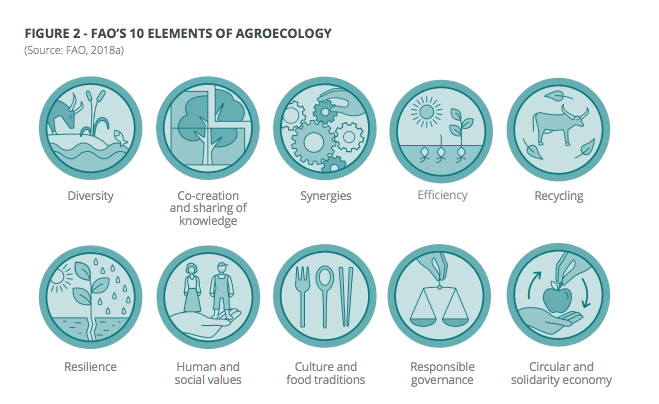
While regenerative agriculture has gained momentum and prominence in Australia, agroecology is much less well-known or understood here, though there is a deep and substantial literature on agroecology internationally. Broadly speaking, agroecology is a scientifically and experientially justified practice of agriculture that is sensitive to the ecosystems in which it is situated and that fosters the democratic participation of farmers in the food system. Its original and still predominant practitioners are Indigenous peoples and peasant smallholders the world over. Many of its advocates make a strong case for relying on peasant and Indigenous knowledge of their land and systems to produce sufficient food sustainably[19]. A science, a set of practices, and a social movement, agroecology is fundamental to my own research project[20], including its concerns with the importance of biodiversity, the role of animals in agroecosystems, and the lived social, economic, and political realities of small-scale farmers.
The term agroecology was coined by Russian agronomist Basil Bensin in 1930, and the practice emerged as more of a social movement in Mexico in the 1970s in resistance to the Green Revolution[21]. Much research has focused on the diversification of agroecosystems over time and space at the field and landscape level, and on enhancing ‘beneficial biological interactions and synergies among the components of agrobiodiversity, thereby promoting key ecological processes and services’[22]. There is also a focus on supporting resource-poor farmers in managing their agroecosystems with minimal inputs[23].
The democratic and ecological potential of agroecology and its political expression in food sovereignty has been well canvassed for decades. There has been an explosion of publications in the last decade that coincided with the UN Food and Agriculture Organisation (FAO) launched a process and series of global and regional symposia on agroecology in 2014[24]. Political analysis in agroecology extends from Marxist ecological examinations of racism in food and agriculture systems[25], to maintaining the integration of Indigenous peoples and peasants within a matrix of wild and managed ecosystems, to rejecting imperialist attempts to lock up ‘nature’ to protect it from ‘humans’[26]. The concept of ‘nature’s matrix’, in which biodiversity, conservation, food production and food sovereignty are all interconnected goals[27] represents a stark contrast to ‘land-sparing’ arguments that posit humans as separate from and antithetical to the health of functional ecosystems[28]. This debate is currently being played out in the UN’s work on development of the post-2020 Global Biodiversity Framework, with peasants, fisherfolk, and Indigenous peoples defending their rights to customary lands and territories as governments and conservation groups push for further enclosures[29].
Presently there are economic, political, and cultural lock-ins that limit the ability of Australian farmers to shift to agroecology. At the same time, there are what Alastair Iles[30] proposes are enablers. At its core, Iles asserts:
Geographical and environmental conditions have made and are making it hard for farmers to adopt agroecological practices. Strong beliefs among scientist, industry, and government elites in the power of science and technology to overcome climate constraints are leading to agroecology being ignored.[31]
He proposes that some of the implications of neoliberal agriculture policies for agroecology in Australia include:
Weak farmer resources for adopting agroecological practices;
demoralized and eroding rural communities; and
investment in export support instead of environmental support[32].
In turn, enabling dynamics for an agroecological transition include:
All of the above enablers are currently coalescing in Australia under:
a global pandemic;
strengthening global and national food sovereignty movements;
the emergence of agroecology schools such as those run by the Australian Food Sovereignty Alliance (AFSA); and
increasingly supportive state governments offering targeted support for small-scale farmers[34].
Food sovereignty embodies the collective politicisation of agroecology. It asserts everyone’s right to nutritious and culturally appropriate food produced and distributed in ethical and ecologically sound ways, and our right to democratically determine our own food and agriculture systems[35]. With its political roots established in the mid-90s in the fertile soils of La VÃa Campesina (LVC) – the global alliance of peasants – food sovereignty was launched into public political discourse at the World Food Summit in Rome in 1996[36]. In the words of McMichael, ‘food sovereignty emerged as the antithesis of the corporate food regime and its (unrealized) claims for “food security” via the free trade rules of the World Trade Organization (WTO)’[37].
Agroecology fundamentally aims to promote the deep ecological, social, and economic knowledge of First Peoples, peasants, and other small-scale food producers and custodians of land. It puts decision making power back in the hands of Indigenous Peoples and peasants and local communities.
Regenerative agriculture is promoted and practised by many who are thinking and acting in much more holistic ways than industrial agriculturalists, but as a peoples’ movement, the approach presently lacks coherence and cohesion. Too much of what I see promoted as regenerative agriculture is still just capitalist agriculture with better inputs. Its ecological work is important but ultimately iterative rather than transformational because of its lack of a political framework. In a critical way regen ag is repeating the errors of the organics movement. Organics were commodified and consolidated because the sector lacked a collective vision to unshackle itself from capitalist food systems.
To my knowledge, regenerative agriculture has not developed a theory of change for an economic or social transformation, and is growing a new generation of ‘experts’ and gurus who profit from teaching the how rather than the what or why. This is a critical juncture for regen ag – can it shift to teaching the ‘what’ as well as the ‘how’? Who will its teachers be? Will they accept the challenge to think and advocate beyond farm boundaries to the broader social and political economies and ecologies within which farmers care for country?
Agroecology, on the other hand, has a well-developed theory of change. It works to support horizontal knowledge sharing by empowering farmers and their communities to learn from and with each other and the land and all on it, rather than relying on external experts for inputs of knowledge or other resources.
Further, by collectivising and uniting the voices of the people in democratically constituted organisations like the Australian Food Sovereignty Alliance (AFSA), and actualizing shared decision-making, agroecology offers genuine political strength and capacity for policy reform as well as grassroots transformations. A major strength of agroecology is that it is immune to being captured as a brand due to its grassroots, democratic principles and practices – nobody can own or certify agroecology because it asserts everybody’s right to practice it without reliance on or creation of externalities.
My intentions are altruistic. I do not aim to divide us, but rather to help understand our histories and ways forward from here. Our objective should be to offer every kind of farmer a path to the next food landscape forward. Regenerative agriculture and agroecology proponents and practitioners ultimately want food and agriculture systems that are ecologically sound and socially just. If we work together, actualizing everyone’s right to nutritious, delicious, and culturally appropriate food produced and distributed in ethical and ecologically sound ways, Australia can get there.
AFSA (Australian Food Sovereignty Alliance). 2018. Major win for food sovereignty as Victoria announces planning reforms, < https://afsa.org.au/blog/2018/06/27/vicplanningreforms/> , [accessed 6/6/21].
Balfour, E. 1975. The Living Soil and the Haughley Experiment, London: Faber and Faber.
Berry, W. 2002. The Art of the Commonplace: The Agrarian Essays of Wendell Berry, Counterpoint Press.
Berry, W. 2004. That Distant Land: The Collected Stories, Counterpoint Press.
Bromfield, L. 1976. Out of the Earth. Wooster Book.
Bromfield, L. 1999. From my experience. Wooster Book.
Bromfield, L. 2015. Malabar Farm. Wooster Book.
Calvário, Rita. 2017. ‘Food sovereignty and new peasantries: on repeasantization and counter-hegemonic contestations in the Basque territory’, The Journal of Peasant Studies, DOI: 10.1080/03066150.2016.1259219
CBD (Convention on Biological Diversity). 2020. Preparations for the Post-2020 Biodiversity Framework. https://www.cbd.int/conferences/post2020 (accessed 28/3/2020).
Costa, T. 2010. Farmer Jane: Women Changing the Way We Eat, Gibbs Smith Press.
Fernandez Arias, P., Jonas, T., Munksgaard, K. 2019. Farming Democracy: Radically Transforming the Food System from the Ground Up, Australian Food Sovereignty Alliance.
Giraldo, O.F, & Rossett, P.M. 2017. ‘Agroecology as a territory in dispute: Between institutionality and social movements.’ Journal of Peasant Studies. [online] DOI:10.1080/03066150.2017.1353496.
Gliessman, S. 2013. Agroecology: Growing the Roots of Resistance, Agroecology and Sustainable Food Systems, 37:1, 19-31
Gosnell, H., Gill, N., Voyer, M. 2019. ‘Transformational adaptation on the farm: Processes of change and persistence in transitions to ‘climate-smart’ regenerative agriculture’, in Global Environmental Change, Volume 59, https://doi.org/10.1016/j.gloenvcha.2019.101965.
Gosnell, H., Charnley, S. and Stanley, P. 2020. Climate change mitigation as a co-benefit of regenerative ranching: insights from Australia and the United States. Interface focus, 10(5), p.20200027.
Heckman, J. 2006. A history of organic farming: Transitions from Sir Albert Howard’s War in the Soil to USDA National Organic Program. Renewable Agriculture and Food Systems. 21. 143 – 150. 10.1079/RAF2005126.
Henderson, G. 1943. The Farming Ladder. Faber and Faber.
Henderson, G. 1950. Farmer’s Progress. Faber and Faber.
Howard, A. 2010. An Agricultural Testament. Oxford City Press.
Howard, A. 2011. The Soil and Health: A Study of Organic Agriculture. Oxford City Press.
Iles, A. 2020. ‘Can Australia transition to an agroecological future?’ AGROECOLOGY AND SUSTAINABLE FOOD SYSTEMS https://doi.org/10.1080/21683565.2020.1780537
Lockie, S. 2009. ‘Agricultural Biodiversity and Neoliberal Regimes of Agri-Environmental Governance in Australia’, Current Sociology, May 2009, Vol. 57(3): 407–426.
Marsh, G. P. 2003. Man and Nature, University of Washington Press.
Massy, C. 2013. Transforming the Earth: A Study in the Change of Agricultural Mindscapes, PhD thesis, ANU.
Massy, C. 2017. Call of the Reed Warbler: A New Agriculture, A New Earth. UQP, Canberra.
Masters, N. 2019. For the Love of Soil: Strategies to Regenerate Our Food Production Systems, Printable Reality.
Mier y Teran G.C., Mateo & Giraldo, O. & Maya, E. M. & Morales, H. & Ferguson, B. & Rosset, P. & Khadse, A. & Campos-Peregrina, M. 2018. Bringing agroecology to scale: key drivers and emblematic cases. Agroecology and Sustainable Food Systems. 42. 1-29. 10.1080/21683565.2018.1443313.
Montenegro de Wit, M. 2020. What grows from a pandemic? Toward an abolitionist agroecology, THE JOURNAL OF PEASANT STUDIES https://doi.org/10.1080/03066150.2020.1854741
Moyles, T. 2018. Women Who Dig: Farming, Feminism, and the Fight to Feed the World, University of Regina Press.
Muir, C. 2014. The Broken Promise of Agricultural Progress: An environmental history, Routledge.
Penniman, L. 2018. Farming While Black: Soul Fire Farm’s Practical Guide to Liberation on the Land, Chelsea Green.
Perfecto, V. 2009. Nature’s Matrix: Linking Agriculture, Conservation and Food Sovereignty. In Nature’s Matrix. Routledge. https://doi.org/10.4324/9781849770132
Plumwood, V. 1993. Feminism and the Mastery of Nature. Routledge, London & New York.
Rebanks, J. 2015. The Shepherd’s Life: A Tale of the Lake District, Penguin.
Rhodes, C.J., 2017. The imperative for regenerative agriculture. Science Progress, 100(1), pp.80-129.
Rodale, J.I. 1945. Pay Dirt: Farming & gardening with composts, New York: Devin-Adair Company.
Rosset, P., Altieri, M. 2017. Agroecology: Science and Politics, Fernwood Publishing.
Salatin, J. 2006. You Can Farm: The entrepreneur’s guide to start and succeed in a farming enterprise, Polyfaces, Inc.
Scott, J. C. 1998. Seeing Like a State: How certain schemes to improve the human condition have failed. Yale University Press, Durham.
Seymour, J. 1974. The Fat of the Land. Faber and Faber.
Sherwood, S. and Uphoff, N., 2000. ‘Soil health: research, practice and policy for a more regenerative agriculture’. Applied Soil Ecology, 15(1), pp.85-97.
Steiner, R. 1974. Agriculture. Biodynamic Agricultural Association.
Toensmeier, E., 2016. The carbon farming solution: a global toolkit of perennial crops and regenerative agriculture practices for climate change mitigation and food security. Chelsea Green Publishing.
Van der Ploeg, J. D. 2018. The New Peasantries: Rural Development in Times of Globalization, 2nd Edition, Routledge.
Wallace, R. 2016. Big Farms Make Big Flu: Dispatches on infectious disease, agribusiness, and the nature of science. Monthly Review Press.
Wallace, R., R. Alders, R. Kock, T. Jonas, R. Wallace, and L. Hogerwerf. 2019. “Health Before Medicine: Community Resilience in Food Landscapesâ€, in One Planet One Health, Sydney University Press. ISBN 9781743325377
Wallace, R. G., Liebman, A., Weisberger, D., Jonas, T., Bergmann, L., Kock, R., & Wallace R. 2021. ‘Industrial Agricultural Environments’ in Routledge Handbook of Biosecurity and Invasive Species, eds. Kezia Barker & Robert A. Francis, Routledge.
This blog started in 2006 as a place to record my musings as I undertook a PhD in cultural studies around practices of consumption (which I did not finish). 15 years later, this is my first post of a new PhD project in anthropology focusing on practices of production – how some farmers are working to radically transform the food system from the ground up.
Below is the minimally edited text of the research proposal seminar I delivered last Friday as a milestone for my PhD at UWA. Feedback welcome. 🙂
***
I’m sharing this today from unceded Dja Dja Wurrung country in the central highlands of Victoria, the traditional and ongoing lands of the Jaara people, to whose elders past, present, and emerging I pay my respects. I’d also like to pay my respects to any Aboriginal or Torres Strait Islanders reading this.
The development of agriculture over the past 12,000 years resulted eventually in what James Scott argues is ‘a contraction of our species’ attention to and practical knowledge of the natural world, a contraction of diet, a contraction of space, and perhaps a contraction, as well, in the breadth of ritual life’ (Scott 2017: 87). As a farmer myself, I find this description of my livelihood somewhat alarming.
Much later, monotheistic religions grew on foundational discourses of human dominion over nature, contributing to the move from more ecologically-sensitive traditional farming practices to the highly mechanised conventions of capitalist industrialised agriculture. This latter form of agriculture has systematised human mastery over nature (Tsing 2012) with devastating consequences, including the sixth mass extinction event in 4.6 billion years (Muir 2014).
In 2019 the UN reported that ‘many key components of biodiversity for food and agriculture at genetic, species, and ecosystem levels are in decline’ and that ‘evidence suggests that the proportion of livestock breeds at risk of extinction is increasing’ (FAO 2019: xxxviii). In Australia as elsewhere, the rise of fast-growing, high-yielding industrial genetics has led to a concurrent loss of rare- and heritage-breed livestock. While there is a movement to preserve heritage breeds led by the Rare Breeds Trust of Australia, it is still relatively nascent and unsupported by government policy (Jonas 2017; Iles 2020).
There is in fact a notable lack of research in Australia on the importance of biodiversity in agriculture (Walton 2019). Recent initiatives such as the Australian Farm Biodiversity Certification Scheme Trial funded by the Federal Government and run by the National Farmers Federation (NFF 2018) demonstrate all too clearly how far Australia has to go in understanding the urgent need for a transformation of agriculture, as to date it does not even explicitly include any focus on increasing biodiversity in agricultural produce, only in the landscape surrounding production areas. That is, in work concerned with the loss of biodiversity in agriculture in Australia, none of it appears to be concerned with the loss of biodiversity in the food we grow and eat, and very little addresses the biodiversity in the soil in which it is grown, which we increasingly understand to be of critical importance to all life.
Happily, my PhD is part of a larger project funded by a DECRA grant entitled ‘Raising Rare Breeds: Domestication, Extinction and Meat in the Anthropocene’, led by my principal supervisor Dr Catie Gressier, which aims to address this dearth of research through developing greater understandings of rare and heritage breed farming across Australia.
My involvement in the broader project around rare breeds is born of my life as a former vegetarian tree-hugging greenie turned pig-farming butcher tree-hugging greenie. My husband and I farm on the ancient volcanic soils of Dja Dja Wurrung country, the traditional and unceded lands of the Jaara people. We moved here a decade ago, motivated by our desire to help grow the movement of ethical and ecologically-sound livestock farmers in Australia. Inspired by the rare breed movement and its biodiverse values, we chose to raise heritage-breed Large Black pigs and a variety of heritage and modern-breed cattle on pasture to fulfil this goal. We were strongly driven by our ethics to raise animals in a high welfare system on pasture, only later coming to realize the full complexity of ecological, social, and political entanglements our path would reveal.
While non-indigenous farmers who identify as ‘regenerative’ or ‘agroecological’ promote their/our innovations on social media, at conferences, and during farmer field days, Altieri & Holt-Gimenez (2016: 2) remind us that ‘the true roots of agroecology lie in the ecological rationale of indigenous and peasant agriculture still prevalent…’ and the UN provides empirical evidence that, globally, Indigenous Peoples and local communities are the best custodians of biodiversity (FAO 2019; IPBES 2019), emphasising the need to look to Indigenous knowledges, and to respect the customary laws and sovereignty of Australia’s First Peoples.
As we have deepened our experience and knowledge of Dja Dja Wurrung country in our relatively short time as custodians, we have also come to better understand the compelling need to ‘decolonize ourselves’ (Land 2015), and to affirm solidarity with First Peoples in order to grow a future for Australia that is ecologically sustainable and socially just for all. Indigenous Knowledges scholar Tyson Yunkaporta (2019: 19) of the Apalech clan of Far North Queensland asserts, ‘We rarely see global sustainability issues addressed using Indigenous perspectives and knowledges. […] It is always about the what and never about the how’.
With interest in Yunkaporta’s ‘how’, the project aims to examine the ways in which Australia’s ‘new peasantry’ (van der Ploeg 2017) can be informed by Indigenous epistemologies and ontologies to combat and adapt to climate change. I ask:
How can small-scale farmers inhabit and care for land in such a way as to maintain healthy agroecosystems and their human and nonhuman communities, while advancing Indigenous peoples’ sovereignty?
What are the discrepancies, and what convergence in Indigenous and non-Indigenous epistemologies is needed (and possible) (Plumwood 2005)?
I aim to contribute to the movement of small-scale non-indigenous farmers as they/we come to terms with our colonial privilege through a process of critical self-reflection alongside ‘public political ally work’ (Land 2015: 164) supporting Indigenous struggles, and to actively promote the ecologically sustainable and socially just work I find.
To explain why I use the term ‘peasant’ in Australia – a country with no history of a peasantry, the 2018 UN Declaration on the Rights of Peasants and Other People Working in Rural Areas defines a peasant such as to include Australian smallholders:
any person who engages or who seeks to engage alone, or in association with others or as a community, in small-scale agricultural production for subsistence and/or for the market, and who relies significantly, though not necessarily exclusively, on family or household labour and other non-monetized ways of organizing labour, and who has a special dependency on and attachment to the land.
Given my position as a farmer-activist-scholar deeply embedded in the communities of interest to this project, I will undertake multi-sited ethnography as an insider anthropologist. The fieldwork with farmers will be guided by the following broad questions:
Why do some farmers choose rare and heritage breeds of livestock?
How are these farmers fostering biodiversity and multi-species flourishings?
How and where are these farmers accessing agroecological knowledge and experience?
Why and how are farmers engaging with local Aboriginal people and their ecological knowledge? (Do they engage with the local Jaara people, or with others outside our bioregion? Directly or indirectly – why?)
What are the constraints and enablers of agroecological farming with rare and heritage breeds? (genetic, technical, legislative, economic, social, ecological)
Three farms will be chosen in the central highlands of Victoria (Dja Dja Wurrung country) for participant observation, based on criteria that they grow rare breed cattle and/or pigs for the commercial sale of meat and/or dairy, and that they sell their produce through direct channels. In addition to participant observation, interviews will be conducted with semi-structured questions designed to elucidate data ranging from the values and paradigms that shape the farmers’ actions, through the everyday practices of rearing heritage breed livestock, to farmers’ relationships with other farmers, those who buy their produce, local Aboriginal peoples, and the state. Questions will also focus on the extent to which the farmers are collectivised – are they associated with agroecology and food sovereignty as a social movement, do they belong to any local, regional, or national organisations, and if so, to what end? Observations of land and water use and health, animal husbandry practices and perceptions of animal welfare will help achieve the aims of the project.
Focus group discussions with more farmers of rare and heritage breeds within and outside my region will also be held online and in person, with some questions adapted from the semi-structured interviews with my key participant farmers. Drawing on the work recounted in Chambers (1989) on ‘reality mapping’ and ‘ecological mapping’ undertaken with farmers in the Global South, farmers in focus groups will be asked to draw a politico-biocultural map of their farms to gain insights into their perspectives on the ecological, social, and political contexts in which they farm.
One of the questions that orients my research is revealing the experiences of other heritage-breed livestock farmers:
What is the relationship between a focus on breed conservation and an awareness of the importance of greater biodiversity at all levels of food and agriculture systems?
By examining the grounded practices, decision-making processes, and stated values of farmers who raise rare- and heritage-breed livestock – exotic non-industrial counter-hegemonic animals – this project seeks to uncover the paradigms farmers bring to their work.
What underpins the decision to raise slow-growing, low-yielding animals to earn a livelihood?
Does the choice to raise rare and heritage breeds sit alongside other values and practices that support more ‘multispecies flourishings’ (Haraway 2016) on farms?
A guiding theme will be to ask how farmers are responding to the burden of responsibility carried by the ‘human condition of living with and for others’ (Bird 2004) as they negotiate entanglements with country and human and nonhuman animals. Yunkaporta (2020) asserts the importance of Aboriginal social structures in achieving sensitive community and land management, describing his clan as, ‘autonomous individuals syndicated together in a collective’. With this framing in mind, I seek to understand the importance of existing connections amongst autonomous small-scale farmers that contribute to cultural and ecological reparations and social organisation, and to learn what collaborative and deliberate practices they engage in to diversify breeds (and grasses and crops) within the region, and to advocate for agroecology-friendly policies. I further aim to identify pathways towards a place-based co-management of Aboriginal lands so damaged by colonial mining and agriculture that the Jaara people call it ‘upside down country’ (Dja Dja Wurrung 2016).
My project is in part a response to the UN’s critical assessment of biodiversity loss and its recommendations, which identified the need to conserve breeds as well as the need for multidisciplinary research to understand the role of greater biodiversity in agriculture more broadly. It is also a continuation of a lifetime concern about the treatment of animals in agriculture, and a long history of food sovereignty activism that ultimately led me to where I now farm with Stuart and a like-minded community that has glimmers of Yunkaporta’s ‘autonomous individuals syndicated together in a collective’.
Ultimately, my project aims to identify the ecological, social, and political factors that contribute to the successful practice of agroecology in Australia. My specific focus is on the practice of raising rare- and heritage-breed pigs and cattle in agroecosystems, and the work being done by small-scale farmers to decolonize agriculture with what I propose are counter-hegemonic breeds. Using insider activist anthropology to work with a selection of farmers in Dja Dja Wurrung country, I aim to understand the values, epistemologies, and politics that lead farmers to choose rare- and heritage-breed livestock and to farm agroecologically.
Ultimately, acknowledging that small-scale farmers operate within certain norms and rules of the state, which have material impacts on their autonomous capacity to farm in ecologically-sustainable and socially-just ways (Wolf 1966; Scott 1998; van der Ploeg 2017), I aim to understand and make visible existing state and supra-state instruments and processes that currently constrain farmers’ activities, and those that can enable agroecology and rare-breed farming in Australia.
In the face of a massive global loss of agricultural biodiversity over many decades, this research can provide critical information and recommendations to slow and address losses, and to support increases in biodiversity in farming. I will engage with local smallholder and Indigenous knowledges and practices on Dja Dja Wurrung country to uncover the diverse stories of Indigenous and non-Indigenous custodians of country. The significance lies in actively working to uncover, support, and promote the biodiverse and decolonizing practices of agroecological farmers of rare- and heritage-breed livestock, to serve the urgent need to value and protect biodiversity in food and agriculture systems in the face of multiple threats from climate change and the emergence of pandemics such as COVID-19.
The project is part of and manifests the values of the social movement for food sovereignty and agroecology. In addition to my life as a farmer, I have been president of the Australian Food Sovereignty Alliance (AFSA) since 2014, which is actively working across all six ‘domains of transformation’ to an agroecological future identified by Anderson et al. (2017). The domains include: access to natural ecosystems; knowledge and culture; systems of exchange; networks; equity; and discourse. This project will contribute to AFSA’s ongoing work for agroecology and food sovereignty, including to AFSA’s project Farming on Other People’s Land (FOOPL), which is developing resources to support diverse share-farming arrangements and farming cooperatives, and acknowledging that all non-Indigenous farmers are farming on other peoples’ land in Australia. This research will also contribute to the food sovereignty movement’s efforts to transform policies at all levels of government to support a transition to agroecology. It will contribute to AFSA’s new Agroecological Action Research Network (AARN), established in 2020 to network scholars and farmers across Australia to grow the body of participatory research towards an agroecological transition.
In following the deeply embedded stories, practices, soils, plants, human and nonhuman animals, and microbes on agroecological farms working to preserve rare- and heritage-breed livestock, as well as the rather more abstract yet specific stories and practices of the state, this project will assert an ontological politics – a politics of materiality and not just representation of ‘what is, what should, and what might be realised’ (Law 2018).
If you’ve
been paying any attention to the myriad articles talking about the likely
causes of the current COVID-19 pandemic, you’ll have read that the hippies were
right – rampant destruction of the environment has led us into a global crisis,
and industrial agriculture is a solid contender for worst offender. Whether
this particular coronavirus came from bats, pangolins, or another creature isn’t
really that important – the knowledge that it’s a zoonotic disease (passed from
animals to humans) – and that all of the other most recent outbreaks (SARS,
MERS, Ebola, Nipah, Zika…) were too – offers more-than sufficient evidence to
act on. In fact, the FAO tells us that more than 70% of all infectious diseases in
humans since the 1940s can be traced to animals.
Rob
Wallace, author of Big Farms Make
Big Flu can answer a lot of your pressing questions on these theories,
so go listen
to him here. (And then google him and find the hundreds of other interviews
and papers he has produced on this topic since well before the outbreak began. (One
of the hardest things about being Rob right now must be resisting the daily
urge to shout ‘I told you so, you bastards!’)
The jury is in – industrial agriculture is a menace to society.
Some of us
have been banging on for many years about the dangers of intensive livestock
production, massive global losses of biodiversity, and the narrowing of genetic
diversity in agriculture specifically, fast animal turnover in industrial systems,
separating breeding and growing operations (with attendant loss of potential herd
immunities), and habitat fragmentation, and it’s turned out we were right all
along. So what’s going to happen? And what alternative futures lay before us?
First, a
quick look at impacts, and then some hopeful possible solutions…
Impacts on the food system
The impacts
are unfolding fast, and in many countries they are awful. I’m not going to
write about the devastation the pandemic is having in countries where health
care systems have been undermined by neoliberal regimes that have
systematically implemented policies that have rejected the public interest, and
nor am I going to offer analysis of the structural racism and classism that
will see the most disadvantaged in society feel the brunt of this crisis. My
expertise is in food systems, so that’s what I’ll stick with. I’m also going to
focus primarily on Australia, because you simply can’t extrapolate the
disruptions to social cohesion, well-being, and domestic economies from one
country to another without making some terrible generalisations and misleading
blunders.
What are
the initial impacts of the COVID-19 pandemic on Australian food systems?
Supermarket
shelves emptied fast as panic buying set in. Their ‘just-in-time’ model of
distribution has proven to be as precarious as food security researchers have
told us for many years. But they have also aggressively hired the newly
unemployed to stack shelves more rapidly – a move that could cast them in the
light of savior in spite of decades of predatory behaviour.
Many
farmers’ markets have been closed, either by risk-averse (and ill-informed, I
would say) councils, or the organisers themselves, though others remain open,
with social
distancing protocols in place. This has left many small-scale farmers in
the desperate position of having to rapidly find other ways to connect to their
eaters, and forced some farmers’ market shoppers back into the arms of their jilted
supermarkets.
Most
restaurants and cafes are either closed or doing takeaway or delivery services
only. The future of the hospitality sector is in question as food service
workers scramble to survive. It remains to be seen whether the government’s
bailout packages will be enough to keep people fed and housed through this
crisis.
Farmers
whose usual market is food service were thrown into crisis along with the
nation’s chefs and other workers, and they have had to rapidly find new markets
for their produce. For small-scale farmers, there has been a greater capacity
to pivot to selling directly to households, though in many cases this has meant
arduous
hours doing direct deliveries without any time to develop these new systems.
The legends
at Open Food Network have risen
to the challenge to bring a thrilling wave of new farmers onto their platform
to directly connect with eaters looking for alternatives to the stupidmarkets.
For
large-scale farms, there is no such agility in a global pandemic. If you’re a
watermelon grower in the Northern Territory whose market is primarily
restaurants, caterers, and airlines, there is nothing to do but watch your
melons rot in the fields. When you’re talking 600 tonnes v. 6 tonnes of produce
to sell, selling direct to eaters is not an option.
For those just tuning in, my hypercompetent husband Stuart and I are small-scale pastured heritage breed pig and cattle farmers, and while our farm exists largely separately from the commodity food system, we remain reliant on two critical umbilicals to the industrial machine: feed and abattoirs.
When we
shifted to an entirely
waste-stream feed supply from our local brewery and other produce from
other surplus yield, we thought we had exited commodity feed production. But
the majority of our feed supply is detritus from the industrial system built on
growth and volume – so we lost most of our feed sources overnight as pubs were
shut down and the brewery stopped brewing. We’re still receiving occasional
container loads of muesli bar ingredients amongst other diverse oddities as
food waste in fact just got worse with the sudden disappearance of food service,
but the reliability of the nutritional quality of our feed took a steep dive.
And we’re not the only ones – small-scale pig farms across Australia have been
egging each other on in our pursuit of non-commodity grain and
ecologically-beneficial feed options, and many of us now face the loss of this
resource and need to return to commodity grain direct from the feed supplier. A
year ago this wasn’t even a viable option as the drought drove prices up to
more than double in some cases. I’ll return to possible solutions that don’t
involve commodity grain in a future post once we’ve given it more thought.
So more
expensive and ecologically dubious feed is one direct impact small-scale livestock
farmers are grappling with, and the other threat we face is the potential closure
of abattoirs, as
is already happening in the US. The problem of a highly centralized food
system is that there are so few facilities left, nearly all owned by a handful
of multinational corporations, and if they are forced to close, farmers of all
sizes lose their options. Given the low margins most abattoirs operate on in
the best of times, one can only assume that many may not be able to continue in
the face of a prolonged shutdown. While Australia’s control of the virus is
leagues ahead of the US and our case numbers still quite low, an outbreak in a
large, vital facility could still be devastating.
Together, we’ve got this
Some of you
reading this have read and/or heard my positions on how to solve the world’s
problems before, and you, like me, may have thought, ‘sounds great, but a bit
utopic, hey? I mean, capitalism isn’t going anywhere…’ But then the current consequences
of humanity’s failures have offered us an opportunity to ‘test the model’,
shall we say. Guess what we’re finding?
Globalised
food systems, capitalism, and disconnected atomized populations are just as
brittle as some of us said they were.
Local food
systems, solidarity economies, and strongly networked and collectivized communities
have got this.
The upsurge
in people seeking memberships with community-supported agriculture (CSA) farms
is breathtaking. Farms that had struggled to compete with peoples’ addiction to
‘convenience’ and achieve full subscriptions are now turning people away. Others
are increasing production to let some more in. Those of us who were already
full are doing what we can to support our members who’ve lost their jobs – our turn
to look after them, because that’s how solidarity economies work – it’s a
two-way street.
A very
smart comrade asked me whether I thought small-scale farmers (aka ‘peasants’) ‘can enter and exit the market as they need
to. When times get tough, cut back to subsistence (in a way corporate farming
can’t).’ It’s an interesting question about the variables that might offer
resilience at different scales. While I think that peasants in the Global South
might have some of this flexibility where they have remained quite separate
from industrial food systems, the ‘new peasantry’ that has arisen across the
world over the past decade (like farmers such as ourselves) probably has less
capacity to expand and contract in the same way, primarily due to carrying high
levels of debt. Flirting with capitalism while trying to crush it is a
dangerous game. Which is not to say that taking on debt makes one a capitalist,
but rather entwined in a system that has made it genuinely difficult to make it
obsolete.
But what I will say for the peasants of the world, be we from a long line of people of the land or relatively newly boots on soil is that resourcefulness and frugality are our bedfellows. Unlike our industrial counterparts, most of us eat what we grow, and we grow what we eat. We savour the products of our labour, and we maintain old traditions of preserving for the lean times. These are the hallmark attributes of peasants the world over, and as I’ve watched my peasant comrades from Australia to Italy, China to America, South Africa to Brazil, I’ve seen their self- and community- sufficiency as the world’s original preppers have found ourselves prepared. We guiltily share how much we’re enjoying lockdown, because farmers eat lockdown for breakfast – it’s like most days of the week for us, but better because we’re forced to be where we most want to be, and so have more time for growing, preserving, and planning a better system.
And planning we are, on our farms, with our communities, and in our collectives. Buckminster Fuller famously said that ‘You never change things by fighting against the existing reality. To change something, build a new model that makes the old model obsolete.’ We have been building the new one (while also fighting the old one), and now we’re (mostly) ready. The old system is eating itself, the new one is going to feed you.
Remember – together, we’ve got this. That means all of us. If you’re unemployed or looking for ways to foster your community – find or start a local Mutual Aid Group. If you’re a farmer or an eater in Australia, join the Australian Food Sovereignty Alliance. In the US, join the US Food Sovereignty Alliance. Every country has its collectives – join yours. Wherever you are, collectivise, organize, and ACT.
Eating is not just natural, it is an agricultural and a political act, as wise people have said before me. Everything we eat must have been grown or manufactured somewhere, somehow, and simply put, some are better than others – better for soil, water, air, plants, animals and people.
The philosophy behind ethical omnivorism is quite simple – it is a principle of doing least harm, treading lightly and trying to produce and consume in closed systems as much as possible. Outputs are inputs, there’s no such thing as waste. Animals are a critical part of healthy agro-ecosystems, but get them out of balance (or divorce them from horticulture entirely), and we have a problem. Why grow thousands of animals in sheds and then try to work out what to do with the concentrated effluence when they can live a natural life on the land while benefiting soils instead of poisoning them?
The ethical omnivore does not float through life sometimes eating critically endangered fish like Orange Ruffy and calling herself a pescatarian. She does not refuse to eat red meat but enjoy the odd bit of factory-farmed bacon because it is too tasty to resist. Nor does she eat meat furtively, with a niggling sense of guilt at the part she is playing in rainforest degradation and the decimation of global fish populations. She may not have all the answers, but she has a framework and a commitment to finding out more and following through on her best options for a delicious, ethical dinner. She eats meat mindfully, with visceral pleasure and gratitude.
The ethical omnivore rejects the notion that the only healthy, sustainable, ethical diet is devoid of animal products, while respecting one’s right and choice to be a vegetarian. She devours a broad range of vegetable-based dishes and accepts the concern that most of the minority world/global north consumes too much meat – both a result of and catalyst for intensive animal agriculture. She agrees with the Slow Meat mantra to ‘eat better meat, less often’.
The ethical omnivore mindfully refuses to eat animals grown entirely indoors, whether in cages or vast sheds, and arms herself with knowledge to find local options for meat from animals raised outdoors and without huge inputs of monocropped grains. She prefers to eat food grown by humans, not manufactured by corporations, and supports a livelihood for local farmers instead of lining the pockets of the power brokers in today’s industrial food chain.
Sometimes the ethical omnivore might eat from the detritus of Big Food, which serves to remind her that it doesn’t even taste good. And then she moves on, continuing with her mindful choices, ever conscious of her own fallibility in a complicated world.
The ethical omnivore eats most things, not too much of any one thing, preferably whole things.
The seminar
was not particularly well advertised amongst farmers and their representative
bodies, and I believe AFSA was the only representative organisation for farmers
who attended. In fact, I learned about the seminar from activists and FAO staff
in Rome – not through any local channels. Conversely, Bayer was there – the
world’s largest supplier of seed and agri-chemicals after last year’s merger
with Monsanto – they now control about 25% of the seed & pesticide market
globally.
The event
started out promisingly enough, with assertions that it used to be ‘agriculture
versus the environment’ but that ‘that time is over,’ and repeated assurances
that we are beyond the time for business-as-usual approaches given the urgency
of the need for radically different agricultural practices in the face of a
rapidly changing climate.
The Chair
of the HLPE Steering Committee Patrick Caron gave an insightful overview of the
context of the report on agroecology and ‘other innovations’, in which he
pointed out that ‘when people talk about agroecology, sustainable
intensification, precision agriculture – they have very different things in
mind…’. Caron explained that this report’s role is to understand disagreements
and to shape the international agenda.
He was
followed by Fergus Lloyd Sinclair of the Agroforestry Institute in Nairobi, the
HLPE Project Team Leader, who presented a very encouraging update on their work
on the report to date. He first candidly shared what a ‘schizophrenic terms of
reference’ the HLPE was given by the CFS, pointing out that ‘agroecology’ and ‘other
innovations’ can be distinguished on the basis of principles. Sinclair asserted
that ‘agroecology is a dynamic space, with many actors… not prescribed… locally
defined in different ways by the people who are practicing it…’ and that there
is a ‘strong connection between indigenous knowledge, traditional agriculture
systems, and science.’
He went on
to explain that agroecology as an innovation is easily distinguished from other
approaches such as ‘sustainable intensification’ (and ‘climate smart agriculture’,
‘nutrient sensitive agriculture’, because agroecology (which may broadly include
aspects of organic agriculture, agroforestry, silvopastoralism, and permaculture)
is labour intensive rather than capital intensive. It relies on the humans in
its system for knowledge and labour rather than capital intensive technological
innovations that seek to largely replace human labour and often even knowledge.
Sinclair also
explained the HLPE’s pitch to include ‘agency’ as a fifth pillar of food
security – a concept already fundamental to food sovereignty, which asserts
everyone’s right to collectively participate in food and agriculture systems.
After this
rousing start, we watched as the CSIRO took to the podium. After thanking her
colleagues from the HLPE and agreeing that we cannot continue with ‘business as
usual’ approaches, the Acting Deputy Director of Food and Agriculture gave a
20-minute presentation on business as usual. She started with some stats:
Australia is 6th largest
land size country in world and 55th largest population
Major exports: wheat, beef, wool,
dairy, wine – mostly to China, USA, and Japan
Farmers are 2.5% of total workforce
90% of our population lives on .2%
of our land
Australian ag workforce: 82% live in
regional areas, 73% work full time, 32% female (more likely to try non business
as usual approaches, more likely to earn off farm income), 1% indigenous
Change areas for Australian ag:
increasing competition, Asia’s growth, evolving consumer, biosecurity &
provenance, resource scarcity, climate change, digital ag, energy disruption
She then
asserted that ongoing innovations are needed to protect our natural resources
as well as agriculture, requiring new forms of surveillance. Wait, what? Next, regarding
upcoming innovations, she said, ‘I aspire for a future where Australian ag is a
price-setter in the global market.’ Okay, but what about agroecology?
Here’s a
list of some of the non-business-as-usual
innovations cited by the CSIRO at this seminar on agroeocology and other
innovations:
yield maps
canola yield based on average
rainfall
nitrogen application impact
virtual fencing (‘quite happy cows
with their lovely collars on’)
genetic engineering for broad-spectrum
disease resistance, novel oils, nitrogen fixing plants, fixing heterosis
through apomixes, pest-resistant legumes, boosting photosynthesis, and biofortified
foods
New grains for human health –
engineering health outcomes into food people eat such as barley and wheat. High
amylose wheat, BARLEYmax, novel fibre wheat, gluten-free cereals, thick
aleurone cereals
Leaf oils – ‘game changer for global
oil production’ – a seed output as well as a leaf output
I guess the
CSIRO is more in the ‘other innovations’ camp. (In fact when a like-minded
colleague asked the CSIRO speaker between sessions why she didn’t speak about
agroecology, she responded that she was ‘instructed not to.’ Let that sink in
for a minute.)
Our mates
from Bayer were the first question off the rank after the opening speakers, revisiting
a point Sinclair made about an ‘increasing moralisation around food.’ The Bayer
rep asked Sinclair how he believes the ‘moralisation of food’ impacts on
equity. It is a tried and true rhetorical trick from industrial ag proponents,
who often seek to establish their own moral position with appeals to equal access
and the role of (presumed but not always proven) cheap technologies (that they
own) to ‘feed the masses.’ They may as well exclaim, ‘Let them eat cake!’ and
be done with it. Whether posed as a question or an assertion, this device always
willfully ignores earlier expert points that hunger is not caused by scarcity
of food, but rather by failures in governance and distribution.
During the
break I was introduced to another CSIRO senior staffer as the president of the
Australian Food Sovereignty Alliance. His response was to raise his eyebrows
and yelp, ‘Food sovereignty? That raises alarm bells with policy people!’ To
which I calmly responded, ‘Really? Policymakers are alarmed by peoples’ right
to democratically participate in the food and agriculture system?’ ‘Yes!’ he
intoned, ‘Internationally it impedes trade!’
I think
that rather than bore you with the rest of what we heard from the CSIRO at the seminar,
all of which is in line with what’s cited above and demonstrates their slavish
devotion to free trade in capitalist global markets to the detriment of most farmers
and eaters everywhere, I’ll leave you with some more interesting input from the
HLPE.
Caron gave
a summation of the status of the current report on agroecology and ‘other
innovations’, which has passed Version 0 and a period of public consultation,
with draft Version 1 due to be released soon.
Part one of
the report asks: What has changed in past 20 years regarding food security
& nutrition (FSN)?
Acknowledgement through different
definitions of FSN of the right to food. FSN until creation of FAO in 1945 was
a national issue, became a global issue in second half of the century.
Increasingly realised that sufficient supply doesn’t ensure FSN.
In 80s and 90s we were talking about
starvation, and now we talk about 800mil suffering hunger & starvation –
mostly rural poor.
We are mainly focusing on yield improvement
when we are wasting a third of production.
Hunger is not decreasing quickly
enough and overweight & obesity are increasing rapidly – well beyond
infectious diseases – and are the number one problem in public health.
Part two of
the report examines the ways in which food systems are changing, and reminds us
that the question is not how to feed 9 billion people, it’s how to feed them in
a sustainable way while providing decent livelihoods for producers. We can use the
food system as a lever to address all the Sustainable Development Goals (SDGs).
‘We thought that improving supply and access to markets would help everyone but
we were wrong.’
The third
part of the draft report has the much-anticipated draft recommendations – what’s
needed to make food systems sustainable? The answers warm a food sovereignty
activist’s heart. How to improve food supply? It could be through investing in
knowledge and technology, reducing food waste, internalizing externalities – they’re
all possibilities. It must be through strengthening resilience – investing in
small-scale ag, securing land and tenure rights, securing social equity and
responsibility with social protection systems, supporting women and youth,
creating decent jobs in agriculture, through investing in education for all.
The HLPE
reminds us we can’t forget the need to change consumption habits, and that to
do so we need to change the food environment – advertisements, subsidies, and banning
some types of food like we have with alcohol and tobacco. The CFS is supposed
to draft voluntary guidelines to be agreed in 2020.
Caron
insists that we must improve governance of food systems and the capacity of
stakeholders to participate. He says that the changes will be knowledge
intensive and we have to invest in knowledge – the answers are not the ones
already on the shelves. We must design new governance of food systems at all
levels – including national levels.
Before
closing we had a final opportunity for questions or comments, so I took the
opportunity to express concern at the CSIRO’s focus over the course of the day
on exports, growth, and increasing yield in spite of the obvious environmental
degradation witnessed up Australia’s eastern coast over the past two years due
to extreme levels of drought in a changing climate, and also in spite of the
expert position presented here and for decades now that we don’t need to grow
more food, we need to make food systems more democratic. The response from the
CSIRO was, ‘we’re an independent science research body – we can’t take sides.’
Well AFSA
can, and we choose a habitable planet for generations to come. By not joining
the heavy weight of evidence showing the changes needed in our food and agriculture
systems, CSIRO are taking a side too – commonly known as the wrong side of
history.